Coming up: whale talk and beach cleanup
WHALE LECTURE
On Thursday evening, the 27th, The Whale Trail is hosting a talk entitled “Biology and Evolution of Whales: The Historic Return of Mammals to the Sea”. Why do whales and dolphins have finger bones in their flippers? Did you know that today’s cetacean’s are descended from ancestors who once lived on shore and then returned to the sea? Jim Kenagy, the Burke Museum’s curator of mammals and professor emeritus of biology at University of Washington, will enlighten us all on this fascinating subject.
Thursday, March 27, 7 - 9pm
C&P Coffee Company, 5612 California Ave SW, Seattle (map it)
$5 (kids for free)
Advance tickets: brownpapertickets.com
The Whale Trail is also sponsoring a beach cleanup on Saturday, March 29, 10:30am - 2:30pm. You can sign up now at info@thewhaletrail.org or contact coordinator Judy Lane here. Volunteers will meet at the picnic table between Shelter 3 and 4 at Lincoln Park (map it).
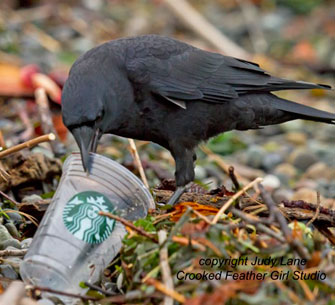
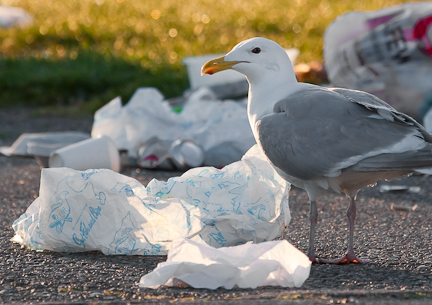
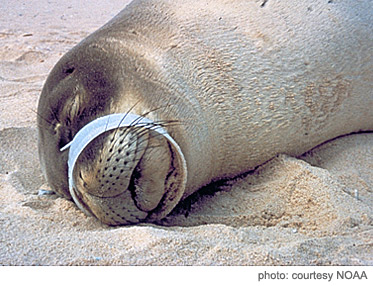
Each year hundreds of thousands of seabirds, marine mammals and sea turtles are injured or killed by marine debris and pollution. Fishing line, plastic bands and bags and other debris strangle, suffocate and mutilate marine life. Too many a one-legged seagull is seen along West Seattle’s shoreline - a victim of amputation by derelict fishing line. Plastics, such as the cup shown here at Lincoln Park (image by Judy Lane), wind up in our waters and photo-degrade into minute particles, attracting pollutants such as PCB’s and flame retardants and enter into the food chain. Consumed by marine life, these pollutants cause deformation and immune disorders. Read more on about marine debris and pollution on Seal Sitters’ website.
Please volunteer some time on Saturday and help protect our marine mammals by removing dangerous trash from the beach!
No "butts" about it - Alki Beach cleanup a success
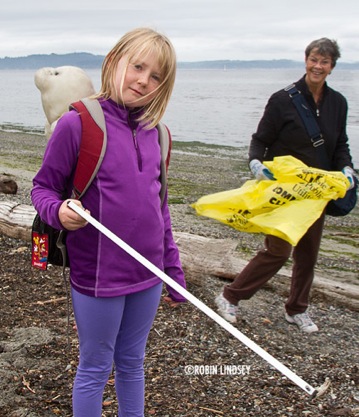
Because yesterday was such a dreary, rainy day with not too many beach-goers, there was not the typical overflow of Friday night garbage strewn all over the sidewalks and beach. However, we assured everyone they would find lots of small, harmful trash - including many cigarette butts. In fact, well over an estimated thousand cigarette butts were picked up in a matter of hours along with plastics and paper.
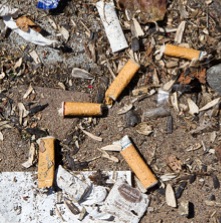
The beach cleanup was a great success - all in all, over 100 hours of volunteer time were donated this morning (we’re still tallying the hours) to help keep all of us and the wildlife we love safe. We thank everyone for their hard work and passion! And a special thanks to SS hotline guru Larry Carpenter for puling everything together to make this happen.
"Sentinels of the Sound" beach cleanup in honor of seal pup Sandy
Harbor seals (who do not migrate and are year-round residents) and orcas, both animals at the top of the food chain, are especially hard hit by pollutants from storm runoff and microplastics which are stored in their blubber. A 2005 study showed that harbor seals of South Puget Sound were 7 times more contaminated with PCBs than those of Canada's Georgia Strait. The orcas of Puget Sound are the most contaminated marine mammals in the world.
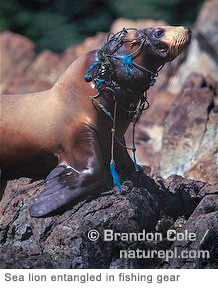
All marine life is endangered by marine debris and pollution. Many, many thousands of marine animals and sea birds die each year from derelict fishing gear, marine debris and pollution. They are entangled and drowned by nets and gear. Strangled and contaminated by plastics.
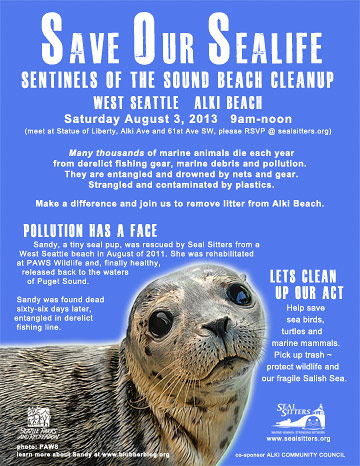
This year's beach cleanup events will once again be in honor of seal pup Sandy who was rescued from a West Seattle beach in August of 2011, rehabilitated at PAWS Wildlife Center, and then released back to the wild in January of 2012. Sandy was fitted with a satellite tag (glued to her fur which would be shed when she molted) to monitor her success in the wild and provide valuable data to biologists about foraging patterns of rehabbed seals. Sixty-six days later, Sandy was found dead, entangled in derlict fishing line off the Edmonds Pier. Read more about Sandy.
Sandy has truly put a face on pollution. Trash on the beach becomes treacherous in the water. You can make a difference! Help keep our beaches clean and our sea life safe. Read more about marine pollution here.
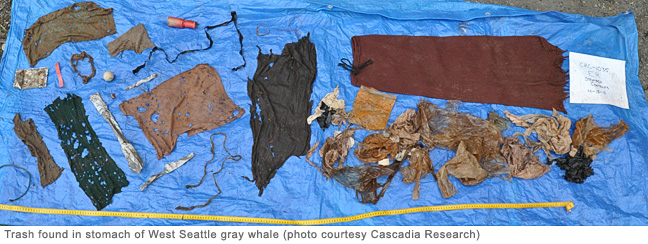
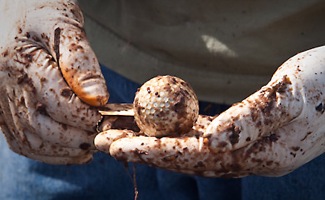
We would also like to honor the memory of the Arroyos gray whale who stranded and died in 2010. The necropsy revealed that there was no food in the thin juvenile male's stomach - only human trash.
Seal Sitters, along with co-sponsors Alki Community Council and Seattle Department of Parks and Recreation, will hold a cleanup of West Seattle's Alki Beach on Saturday, August 3 from 9am-noon. We will assemble at Alki's Statue of Liberty plaza (61st Ave SW and Alki Ave SW). Please RSVP for this event so we have enough bags and equipment on hand.
Read about last year's event here.
WA House of Representatives bans flame retardants
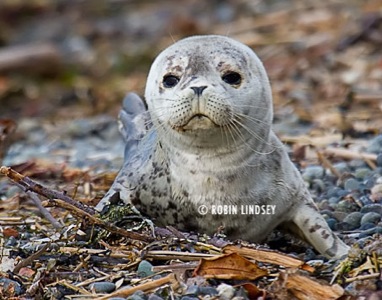
Seal Sitters Marine Mammal Stranding Network and Sno-King Marine Mammal Response strongly support the work of Washington Toxics Coalition and this act. Toxic chemicals in our waterways affect all living things, most especially that of our marine life. A 2005 study showed the harbor seals of South Puget Sound were 7 times more contaminated than those living in Canada's Georgia Strait. Biologists use tissue samples from both live and dead seals to monitor the health of the Sound, measuring levels of PCBs, flame retardants, pesticides and other highly toxic chemicals.
While a ban of PCBs has reduced those toxins in recent years, the number of chemicals used in flame retardants (including those known as PBDEs) have greatly increased. Studies show that PBDE concentrations have been doubling every 3.5 years and have even been detected in the high Arctic. Contaminants are stored in the blubber of marine mammals at the top of the food chain, such as dolphins, seals and orcas. The Southern Resident orcas are among the most contaminated marine mammals in the world. These toxins pass from generation to generation through the milk of mothers to their offspring. Humans, of course, are also at the top of the food chain - and those who consume fish from these toxic waters have high contaminant loads.
Harbor seal pups from our area, the Main Basin of Puget Sound, are more highly contaminated with PCBs and PBDEs than other areas of Puget Sound. Sadly, because seal pups are so contaminated, they are considered the ideal subject for these studies. Read the full study of contaminants in Puget Sound here.
Exposure to flame retardants causes physical abnormalities (including that of the brain, impairing the development of motor activities and cognition), behavioral changes, impairs reproduction and causes immune disorders.
The passage of the Toxic-Free Kids and Families Act HB 1294 is a major step forward in reducing the devastating impact of flame retardants in our waters. Congratulations to Washington Toxics Coalition and their partners for this major achievement. Read more about their important work and environmental toxins here. The bill must now go before the State Senate. Please contact your senators here to let them know you support this act! Ensure that Washington State is the first in the nation to ban these flame retardants.
Read more about our polluted waters on Seal Sitters’ website. Seal Sitters’ Year of the Seal educational outreach project will focus on the health of our marine ecosystem and the harbor seal as the sentinel species representing the marine life of Puget Sound.
Lend a hand for beach cleanup and save marine life
NOAA has produced several children’s activity booklets about marine debris that are available here for download: Protect the Ocean and Understanding Marine Debris. Both contain puzzles and illustrations that help kids understand the importance of keeping the beaches and marine waters free of trash - so that sea life will be here for many generations to come!
Thanks to the Americorps (Washington Reading Corps of South King County) volunteers who will be participating in the beach cleanup as well as members of ACC and Seal Sitters. This event is open to the public and all those interested in making a difference for the environment. If you, your group, or class would like to lend a hand, meet us at the Statue of Liberty across from Starbucks (Alki Ave SW near 61st) at 9am. If you have questions, please contact Larry Carpenter @ 206-938-0887. Special thanks to Carol Baker and Colleen Hackett of Seattle Parks for providing cleanup tools. Tully’s, Starbucks and Pioneer Coffee are all generously donating coffee to keep our volunteers warm and energized throughout the morning. We hope to see you there!
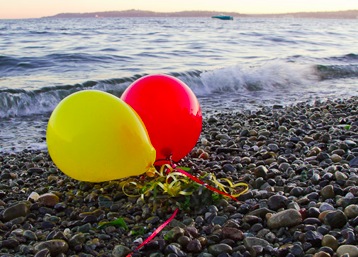
Balloons are no party favor for marine mammals
Early morning wake-up call
Gray whale necropsy reveals trash inside stomach
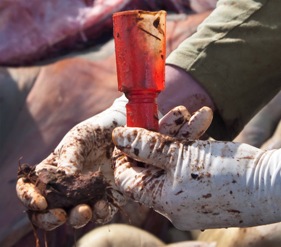
The public should give many thanks to the necropsy team for performing this incredibly important and physically strenuous work. Due to their dedication and efforts, we are now aware of the role that pollution may have played in the death of this whale - as it indeed impacts all our marine life. Plastics that end up in our waters never go away - they eventually end up as micro particles which absorb contaminants and enter the marine food chain, causing deformities and disease. It is well known that our local seals and orcas are laced with pcbs and other toxic chemicals. Depletion of food sources caused by commercial overfishing and pollution can be reversed by getting involved. You CAN make a difference - pick up trash on the beach, don’t purchase seafood on the seafood watch list and ask your grocer not to sell it, help clean up the Sound.
As an observer, our volunteer was stunned at the amount of trash that was removed from the whale - and overwhelmed with sadness that human impact had, in any way, contributed to this whale’s demise. Please learn more about our polluted waters and the Great Pacific Garbage Patch, an oceanic swirling mass of plastic twice the size of Texas, on Seal Sitters’ website. Educate people about the dangers of pollution and its tragic impact on our wildlife now and for generations to come. Make a commitment that this magnificent whale’s life was not given in vain.
See news video here.
Read Lynda Mape’s excellent article in the Seattle Times.